
-
The Attractive Single Stone Ring in 925 Sterling Silver
Regular price $195.91 USDRegular price Sale price $195.91 USD -
The Attractive Single Stone Ring
Regular price From $982.98 USDRegular price Sale price From $982.98 USD -
The Edgy Single Stone Ring in 925 Sterling Silver
Regular price $171.84 USDRegular price Sale price $171.84 USD -
The Edgy Single Stone Ring
Regular price From $823.93 USDRegular price Sale price From $823.93 USD -
The Impeccable Halo Ring in 925 Sterling Silver
Regular price $164.22 USDRegular price Sale price $164.22 USD -
The Impeccable Halo Ring
Regular price From $773.84 USDRegular price Sale price From $773.84 USD -
The Attractive Halo Ring in 925 Sterling Silver
Regular price $195.71 USDRegular price Sale price $195.71 USD -
The Attractive Halo Ring
Regular price From $965.93 USDRegular price Sale price From $965.93 USD -
The Sweet Looking Halo Ring in 925 Sterling Silver
Regular price $185.07 USDRegular price Sale price $185.07 USD -
The Sweet Looking Halo Ring
Regular price From $901.20 USDRegular price Sale price From $901.20 USD -
The Special Solitaire Ring in 925 Sterling Silver
Regular price $204.17 USDRegular price Sale price $204.17 USD -
The Special Solitaire Ring
Regular price From $1,062.36 USDRegular price Sale price From $1,062.36 USD -
The Favourable Halo Ring in 925 Sterling Silver
Regular price $186.87 USDRegular price Sale price $186.87 USD -
The Favourable Halo Ring
Regular price From $893.73 USDRegular price Sale price From $893.73 USD -
The Motivating Half Eternity Ring in 925 Sterling Silver
Regular price $224.05 USDRegular price Sale price $224.05 USD -
The Motivating Half Eternity Ring
Regular price From $1,182.29 USDRegular price Sale price From $1,182.29 USD -
The Dashing Three Stone Ring in 925 Sterling Silver
Regular price $189.58 USDRegular price Sale price $189.58 USD -
The Dashing Three Stone Ring
Regular price From $938.01 USDRegular price Sale price From $938.01 USD -
The Divine Three Stone Ring in 925 Sterling Silver
Regular price $201.00 USDRegular price Sale price $201.00 USD -
The Divine Three Stone Ring
Regular price From $1,026.62 USDRegular price Sale price From $1,026.62 USD -
The Exquisite Halo Ring in 925 Sterling Silver
Regular price $169.44 USDRegular price Sale price $169.44 USD -
The Exquisite Halo Ring
Regular price From $819.28 USDRegular price Sale price From $819.28 USD -
The Innovadora Halo Ring in 925 Sterling Silver
Regular price $177.71 USDRegular price Sale price $177.71 USD -
The Innovadora Halo Ring
Regular price From $864.68 USDRegular price Sale price From $864.68 USD -
The Linda Halo Ring in 925 Sterling Silver
Regular price $154.82 USDRegular price Sale price $154.82 USD -
The Linda Halo Ring
Regular price From $698.52 USDRegular price Sale price From $698.52 USD

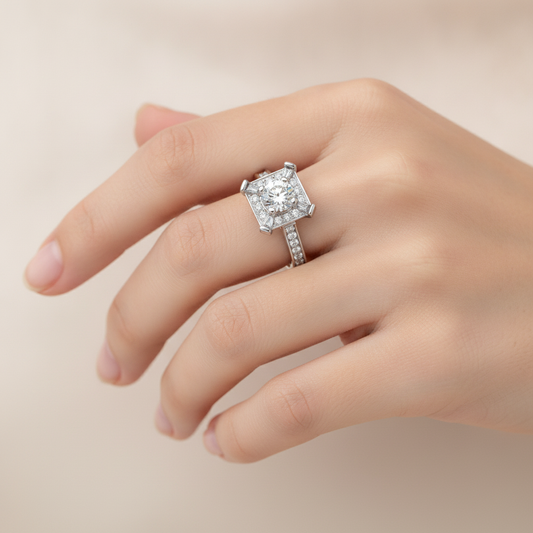

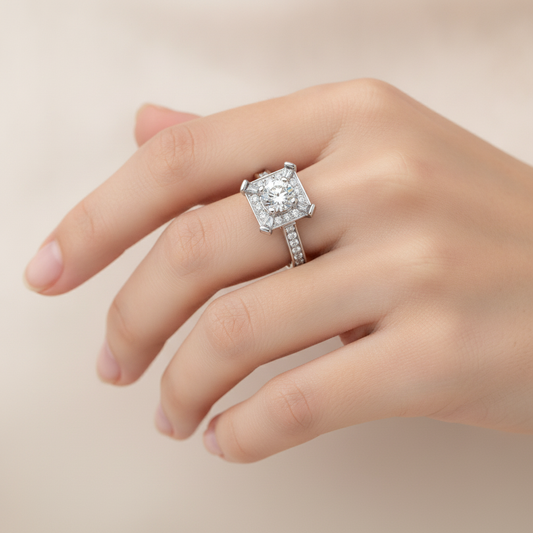

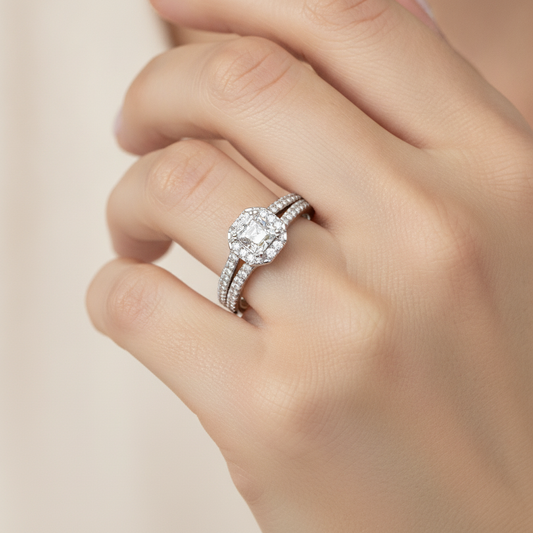

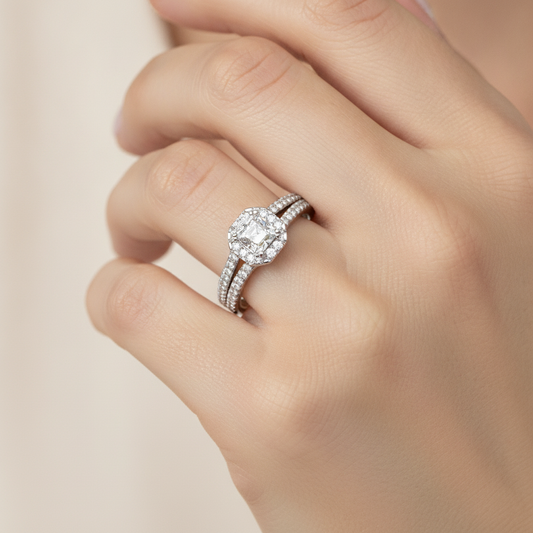

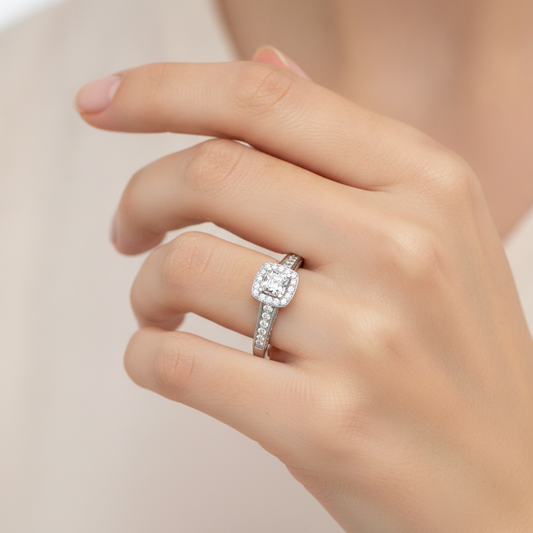

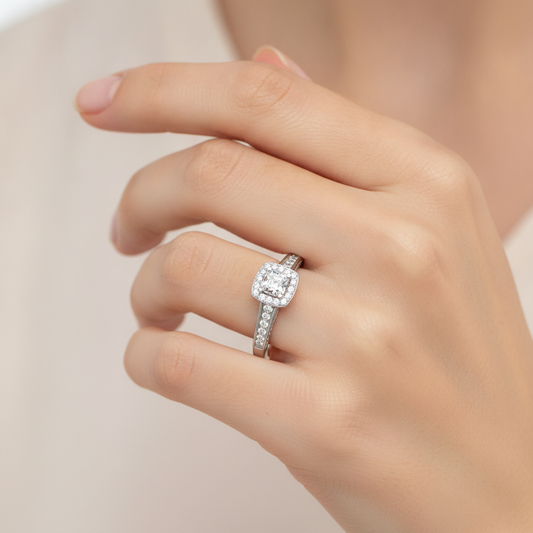

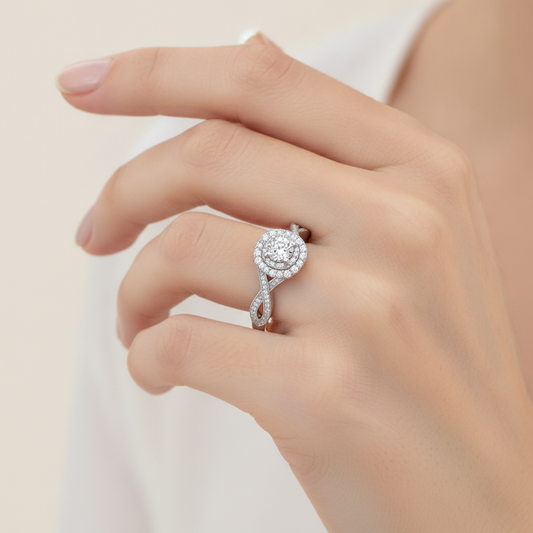

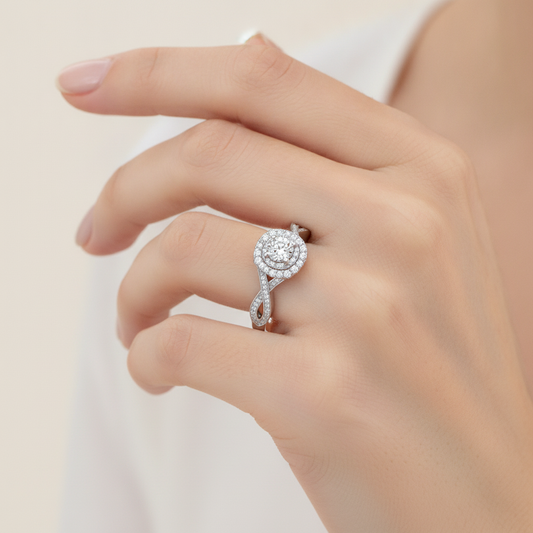

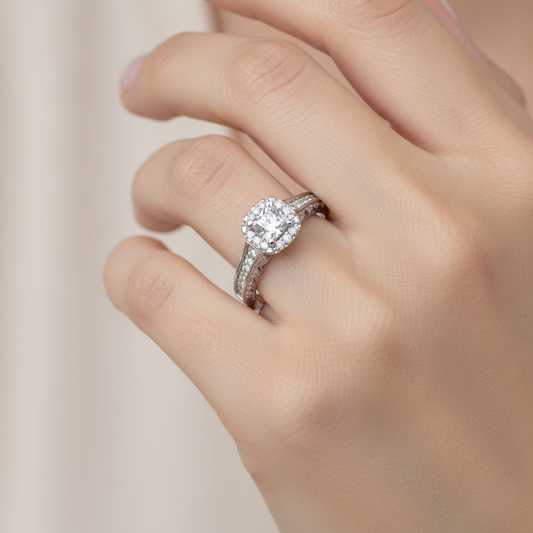

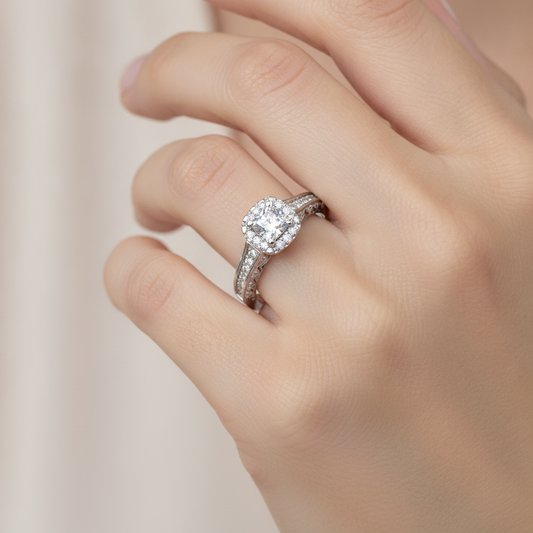

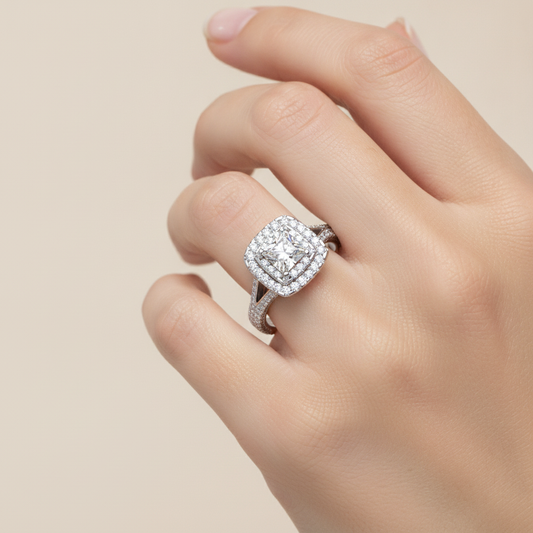

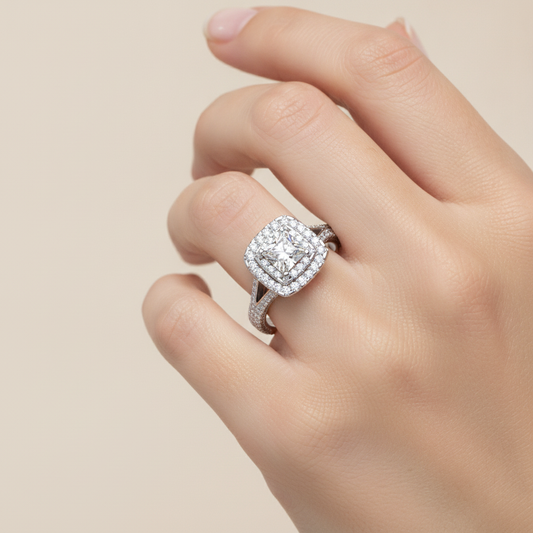

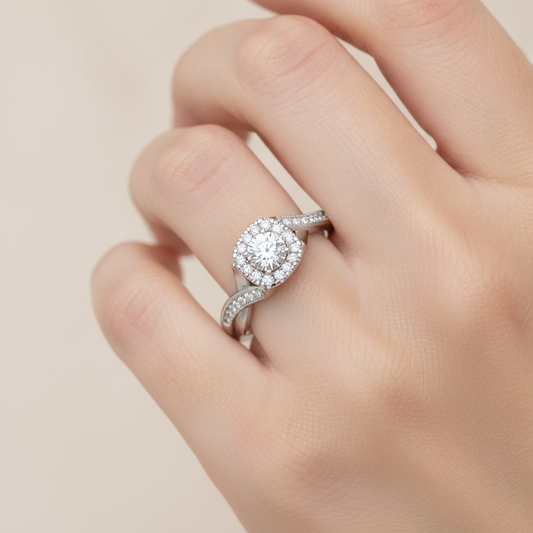

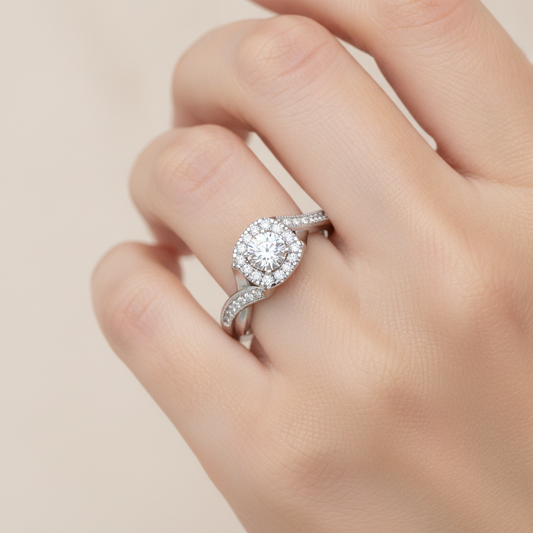

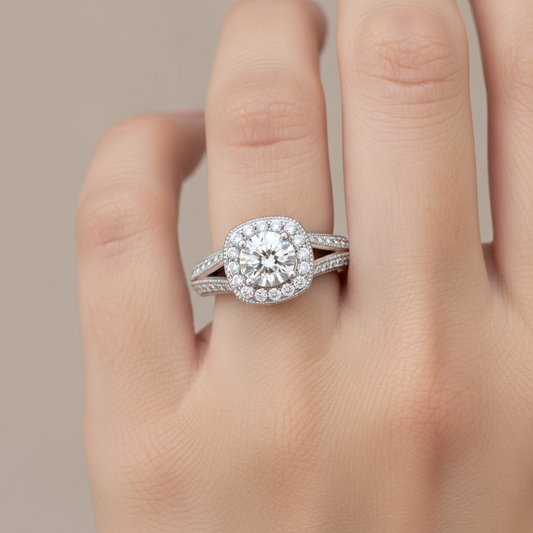

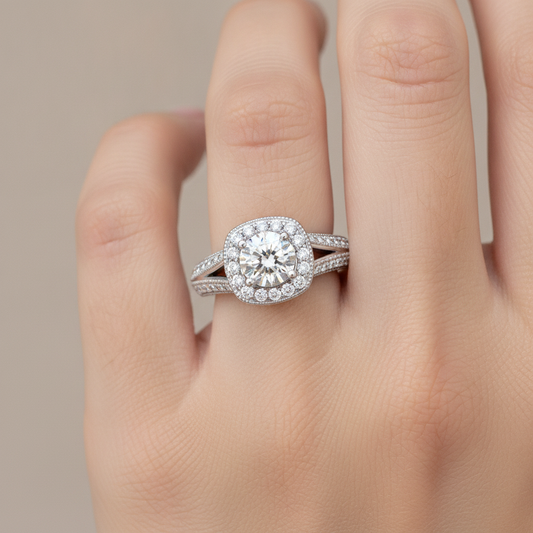

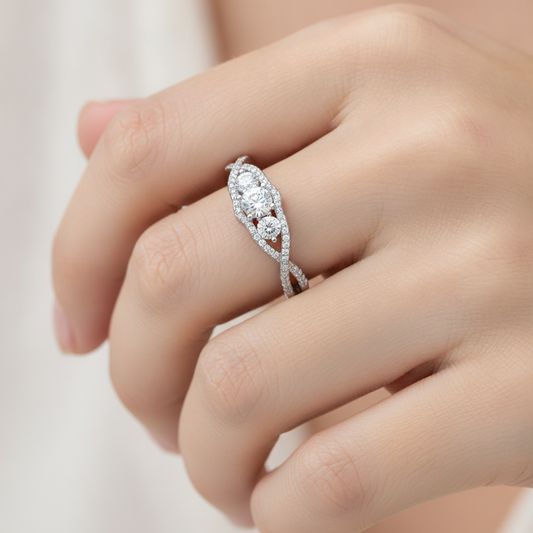

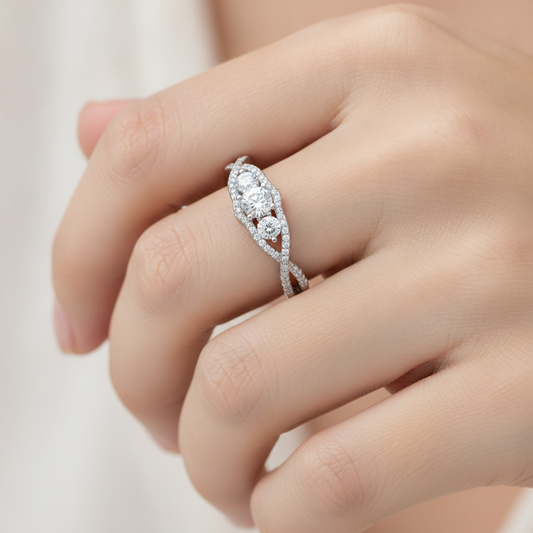


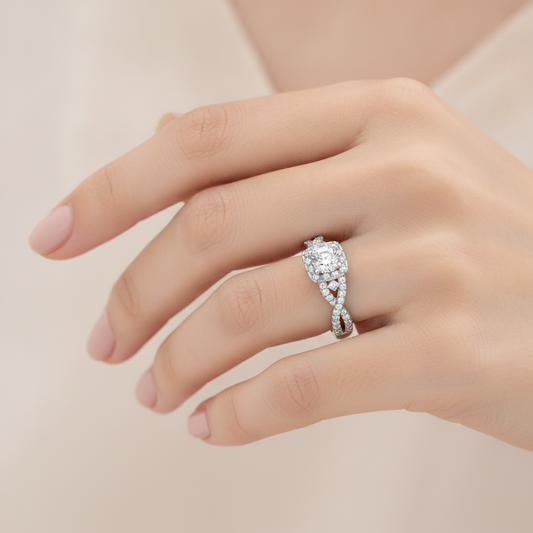


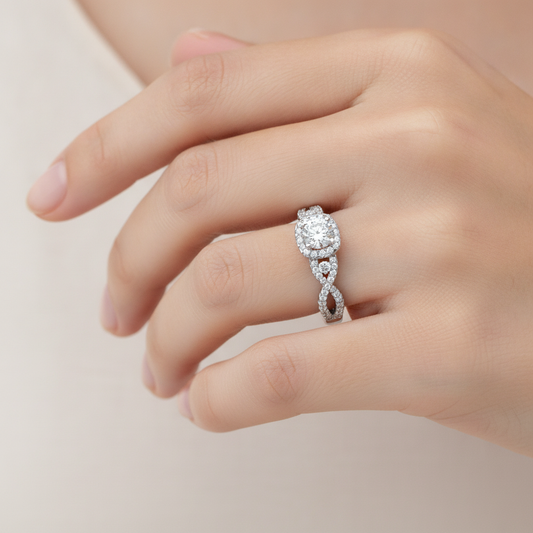


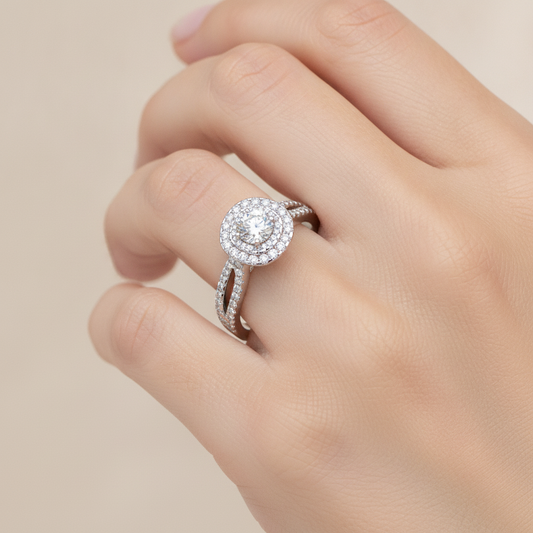


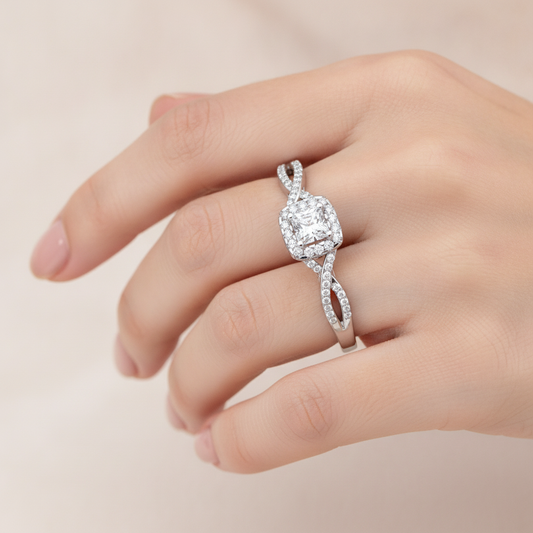
Every one of the lab-grown diamond halo engagement rings in this collection is made to order in our own workshop, in solid 9K, 14K or 18K gold. The centre stone sits inside a close-set frame of smaller diamonds, which lifts the apparent size of the stone without adding to its carat weight. Choose your karat, your metal colour and your size, and we cut and set the ring for you.
Halo Engagement Ring Shapes
The shape of the centre stone changes the whole character of a halo ring, and it is worth deciding before anything else. A round centre stone gives the most even return of light and is the simplest shape to frame, because a circular halo sits evenly around it with no awkward corners. It is still the most ordered shape for that reason. A heart cut is the most personal of the four we make and the hardest to set well, because the cleft at the top has to stay sharp and unobstructed once the halo goes around it. If that is the shape you want, look at the heart shaped halo ring first. A pear cut behaves differently again. Because the outline is longer than it is wide, it covers more of the finger than a round stone of the same weight and reads visibly larger on the hand. It also lengthens the look of shorter fingers, which is why it is chosen so often. Marquise works on the same principle with sharper points and a more distinctive silhouette. Both shapes carry one thing worth knowing before you commit to either. The tip of a pear, and the two tips of a marquise, are the thinnest part of the stone and the part most likely to chip if the ring catches a hard edge. A halo helps here, because the frame of small diamonds sits proud of those points and takes the contact before the centre stone does. For most people comparing the two, the pear shaped halo ring is the easier of the two to wear day to day.

Halo Engagement Rings in 9K, 14K and 18K Gold
Karat is the part of the decision most jewellers skip, and it changes both how the ring feels and what it costs. 9K gold contains less pure gold, which makes the alloy harder and more resistant to scratching and denting. That suits someone who works with their hands, trains regularly, or simply does not want to think about their ring. 18K holds far more gold, so the yellow is deeper and the rose is warmer, and it sits closer to what most people picture when they imagine fine jewellery. It is also softer, so it marks more easily. 14K sits between the two and is the most common choice for a ring worn every day without being taken off. All three are solid gold throughout rather than plated, and all three are available in yellow, white and rose across this collection. If you would rather have a single stone with no frame around it, our solitaire diamond rings use exactly the same metals.
IGI Certified Lab-Grown Diamonds

Every stone in this collection is a lab-grown diamond. That is a real diamond, with the same carbon structure, the same hardness and the same optical behaviour as one taken out of the ground. The difference is where it formed, not what it is. Because supply is not constrained in the same way, a lab-grown stone gives you noticeably more carat weight for the same spend, and that matters more in a halo design than almost anywhere else, since the whole effect depends on the centre stone carrying enough presence. The stones are certified by IGI, and the report records cut, colour, clarity and carat weight, so you are not taking our word for the grade. A certificate of authenticity is issued with every diamond ring we ship. Our wider range of diamond engagement rings is held to the same standard.
Halo vs Solitaire Engagement Rings
A solitaire puts one stone on a clean band and lets it stand alone. A halo surrounds that stone with a ring of smaller diamonds, and the practical effect is that the centre reads roughly a quarter to a half carat larger than it measures. If your budget caps the centre stone at a size you are not completely happy with, a halo is the most direct way to close that gap without spending more. The trade-off is upkeep, and it is worth being clear about. More small stones means more settings, more places for dust and hand cream to collect, and a design that benefits from a check every year or two to confirm none of the pave has worked loose. A solitaire asks less of you. Neither is more traditional than the other, since halo designs have been made since the 1920s. If you want extra width without pave, three stone rings sit between the two.
Made to Order in Our Own Workshop
Jebij has manufactured fine jewellery since 1970, and the business is now in its fourth generation. We are not a reseller listing stock that is held somewhere else, and nothing in this collection is sitting in a box waiting to be shipped. When an order comes in, the ring is cast in the karat and the colour you selected, the stones are set by hand, and the finished piece is checked before it leaves us. That is the reason we can offer the same design in 9K, 14K and 18K rather than restricting you to whichever version happened to be produced in bulk. It is also why we can make something that is not shown on this page at all. If you already have a design in mind, our custom jewellery service starts from a photograph or a sketch.

Choosing a Halo Engagement Ring for Everyday Wear
Three things matter if the ring is going to be worn constantly. The first is a profile. A setting that sits low against the finger catches on clothing and hair far less than a raised one, and the designs here are built low for that reason. The second is the halo itself, which does real work beyond appearance. The frame of small stones forms a physical border around the girdle of the centre diamond and takes knocks before the centre stone does, which is a genuine advantage over an exposed solitaire. The third is fit, and it is the one most often got wrong. A ring that is even slightly loose will rotate on the finger, and a halo that rotates wears down unevenly on one side. We make sizes 3 to 8.5, including half sizes, and the ring size chart will get you to the right one before you order rather than after.
Explore Other Collections
-

Diamond Tennis Bracelets in Solid Gold
A diamond tennis bracelet is a continuous line of matched stones held...
-

Gemstone Hoop Earrings and Huggies in Solid Gold
A hoop is the earring that sets the balance of a face....
-

Gold and Diamond Bracelets for Women
A bracelet is worn more actively than any other piece of jewellery....


