
-
Emerald Pav Drop Earrings with Beaded Frame
Regular price From $398.10 USDRegular price Sale price From $398.10 USDSale -
Pink Crystal Pav Disc Drop Earrings with Hook Closure
Regular price From $387.64 USDRegular price Sale price From $387.64 USDSale -
Blue Sapphire Pav Disc Drop Earrings with Beaded Halo
Regular price From $377.17 USDRegular price Sale price From $377.17 USDSale -
Pav Disc Drop Earrings with Beaded Halo Border
Regular price From $437.44 USDRegular price Sale price From $437.44 USDSale -
Emerald Heart Threader Earrings with Bar Drop Chain Detail
Regular price From $485.19 USDRegular price Sale price From $485.19 USDSale -
Ruby Heart Threader Earrings with Bar Drop
Regular price From $474.73 USDRegular price Sale price From $474.73 USDSale -
Blue Sapphire Heart Threader Earrings with Bar Drop
Regular price From $464.26 USDRegular price Sale price From $464.26 USDSale -
Crystal Heart Threader Earrings with Bar Drop
Regular price From $440.67 USDRegular price Sale price From $440.67 USDSale -
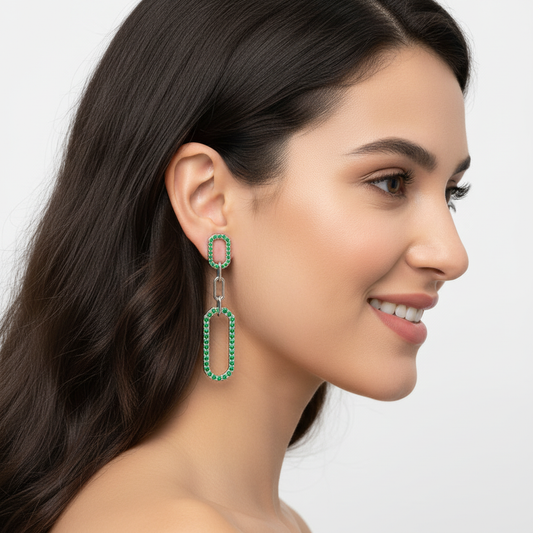
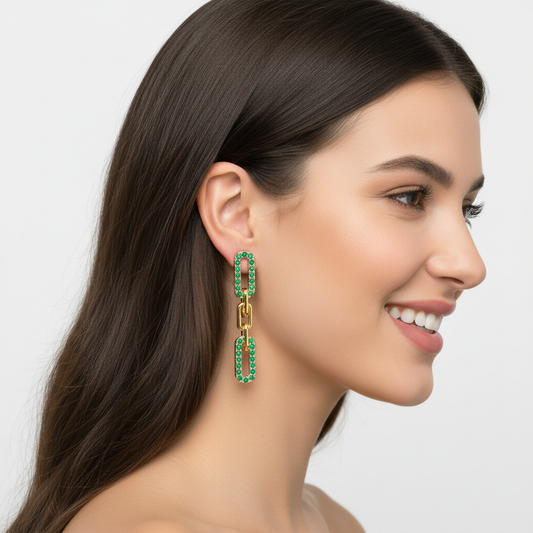
Green Lab Grown Gemstone Link Drop Earrings Pave Oval Chain Statement Dangle Design
Regular price From $475.51 USDRegular price Sale price From $475.51 USDSale -
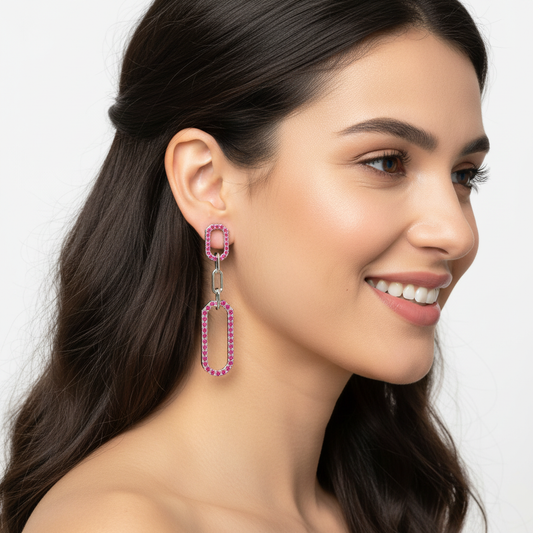
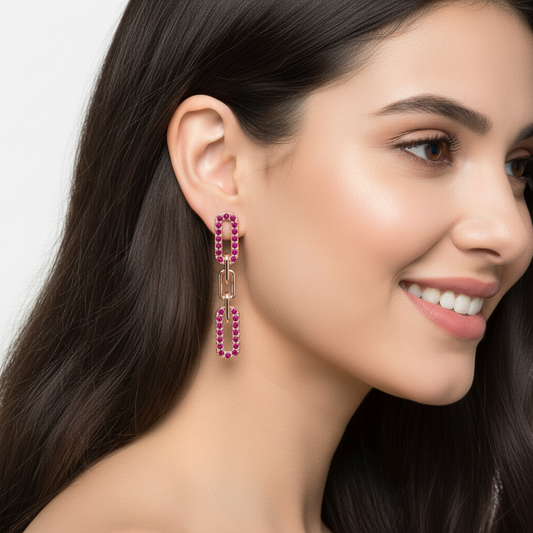
Pink Lab Grown Gemstone Link Drop Earrings Pave Oval Chain Statement Dangle Design
Regular price From $465.05 USDRegular price Sale price From $465.05 USDSale -
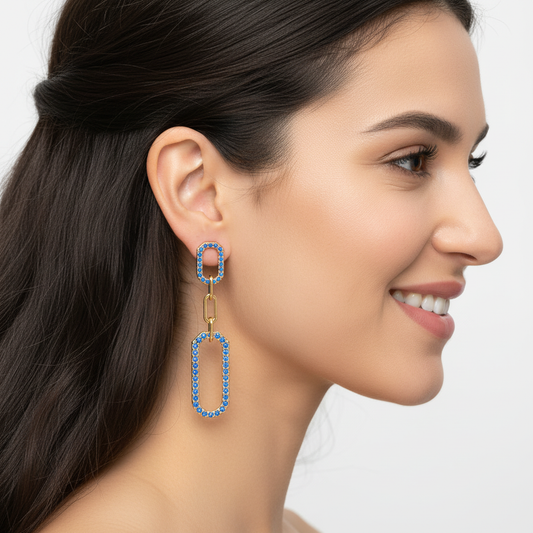
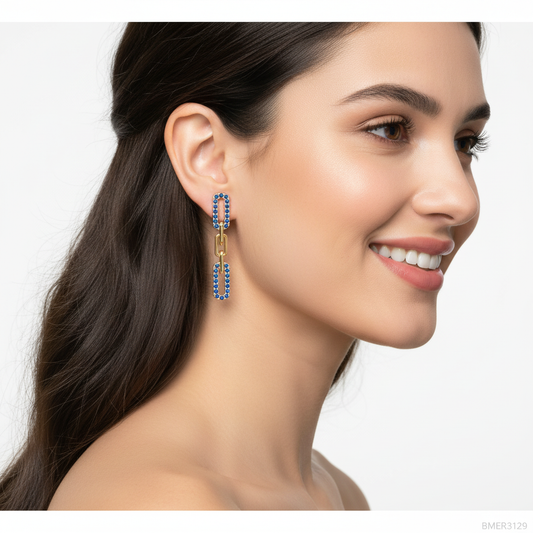
Blue Lab Grown Gemstone Link Drop Earrings Pave Oval Chain Statement Dangle Design
Regular price From $454.59 USDRegular price Sale price From $454.59 USDSale -
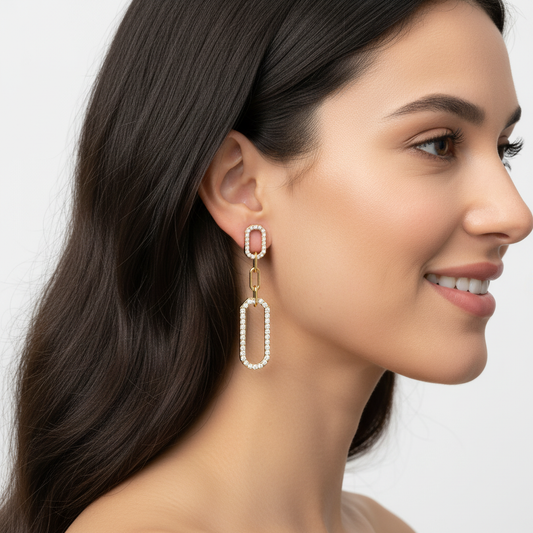
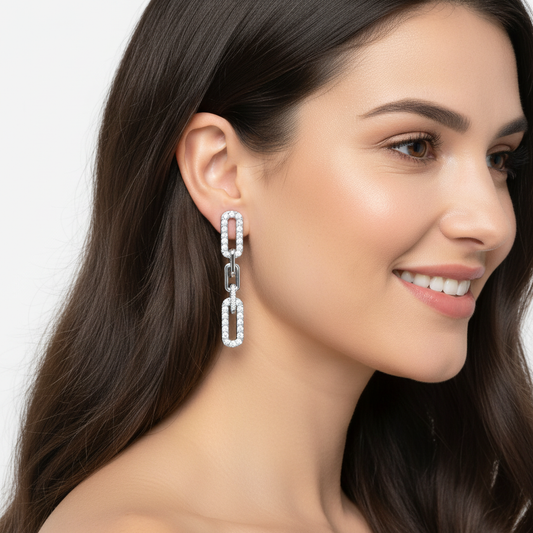
White Diamond Link Drop Earrings Pave Oval Chain Statement Dangle Design
Regular price From $547.45 USDRegular price Sale price From $547.45 USDSale -
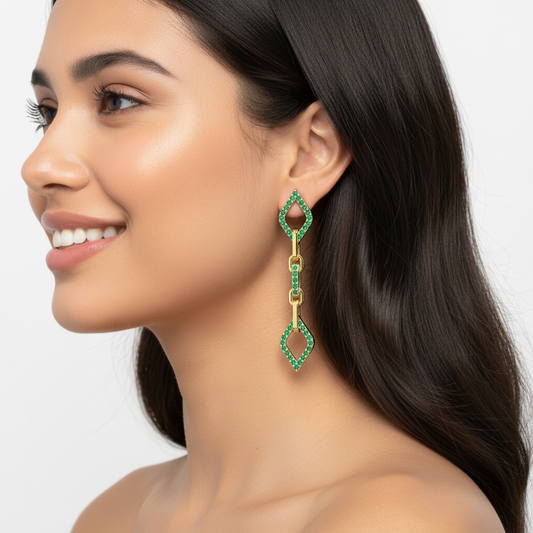
Emerald Chain Link Drop Earrings with Geometric Diamond Shapes
Regular price From $591.64 USDRegular price Sale price From $591.64 USDSale -
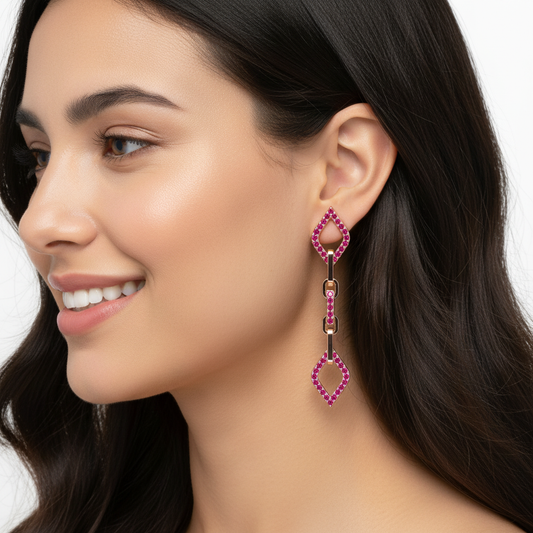
Ruby Chain Link Drop Earrings with Diamond Shaped Accents
Regular price From $581.17 USDRegular price Sale price From $581.17 USDSale -
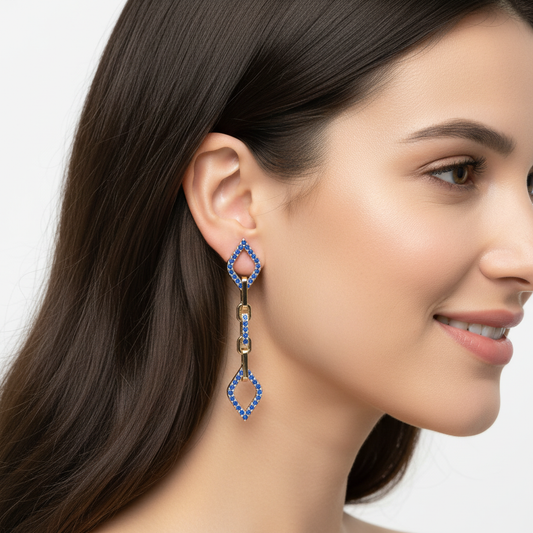
Blue Sapphire Chain Link Drop Earrings with Diamond Shaped Frames
Regular price From $570.71 USDRegular price Sale price From $570.71 USDSale -
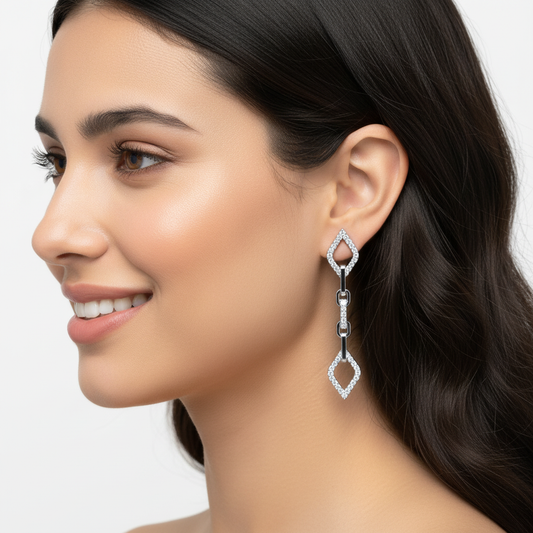
Diamond Chain Link Drop Earrings with Geometric Motif
Regular price From $612.56 USDRegular price Sale price From $612.56 USDSale -
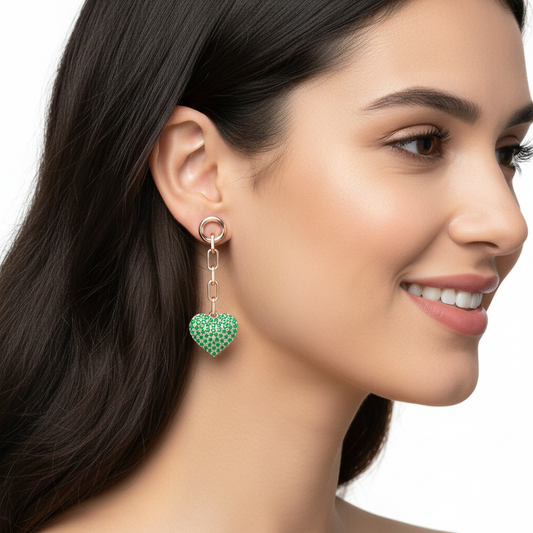
Emerald Pav Heart Chain Link Drop Earrings
Regular price From $688.40 USDRegular price Sale price From $688.40 USDSale -
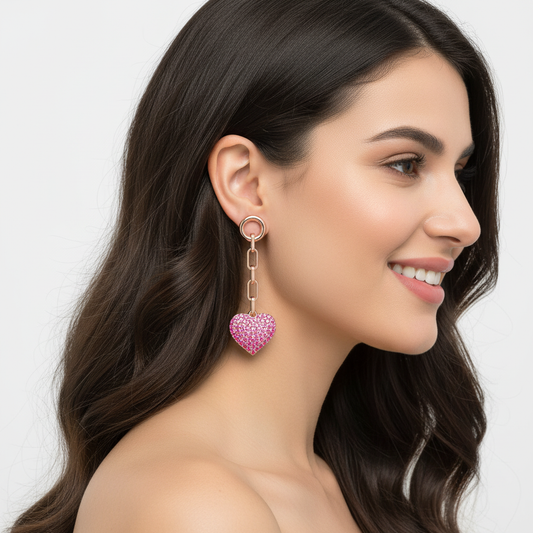
Pink Crystal Heart Chain Link Drop Earrings
Regular price From $677.94 USDRegular price Sale price From $677.94 USDSale -
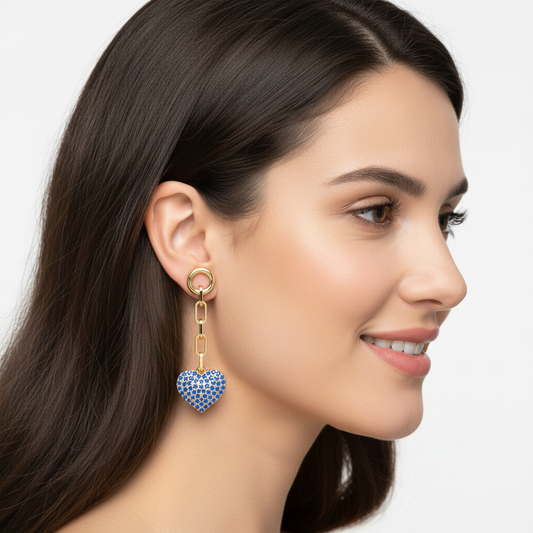
Blue Crystal Heart Chain Link Drop Earrings
Regular price From $667.48 USDRegular price Sale price From $667.48 USDSale -
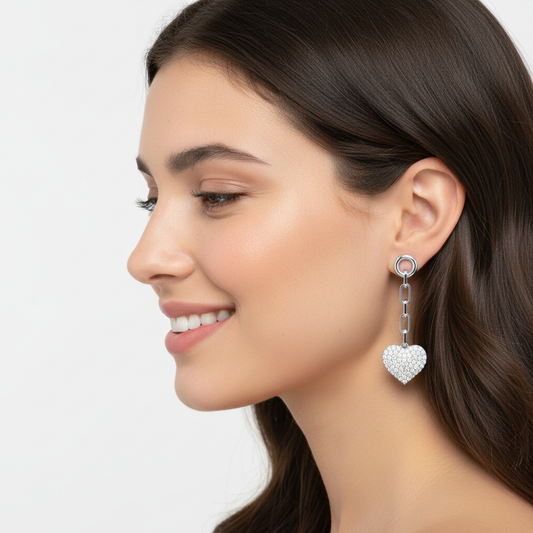
Pav Heart Chain Link Drop Earrings
Regular price From $863.31 USDRegular price Sale price From $863.31 USDSale -
Emerald Triple Circle Link Drop Earrings
Regular price From $514.22 USDRegular price Sale price From $514.22 USDSale -
Pink Sapphire Triple Circle Link Drop Earrings
Regular price From $503.76 USDRegular price Sale price From $503.76 USDSale -
Blue Sapphire Triple Circle Link Drop Earrings
Regular price From $493.29 USDRegular price Sale price From $493.29 USDSale -
Triple Circle Link Drop Earrings with Pav Crystals
Regular price From $536.20 USDRegular price Sale price From $536.20 USDSale -
Emerald Chain Link Drop Earrings
Regular price From $562.61 USDRegular price Sale price From $562.61 USDSale -
Pink Crystal Triple Link Chain Drop Earrings
Regular price From $552.14 USDRegular price Sale price From $552.14 USDSale -
Blue Crystal Chain Link Drop Earrings
Regular price From $552.14 USDRegular price Sale price From $552.14 USDSale -
Pav Chain Link Drop Earrings with Rectangular Links
Regular price From $736.31 USDRegular price Sale price From $736.31 USDSale -
Geometric Green Gemstone Chain Link Drop Earrings
Regular price From $655.72 USDRegular price Sale price From $655.72 USDSale -
Red Gemstone Geometric Chain Drop Earrings with Rectangle and Circle Links
Regular price From $645.25 USDRegular price Sale price From $645.25 USDSale -
Blue Gemstone Geometric Chain Link Drop Earrings
Regular price From $650.48 USDRegular price Sale price From $650.48 USDSale -
Geometric Chain Link Pav Drop Earrings
Regular price From $749.89 USDRegular price Sale price From $749.89 USDSale -
Emerald Multi Link Drop Earrings in Yellow Gold
Regular price From $562.61 USDRegular price Sale price From $562.61 USDSale -
Pink Gemstone Chain Link Drop Earrings
Regular price From $552.14 USDRegular price Sale price From $552.14 USDSale -
Blue Sapphire Chain Link Drop Earrings
Regular price From $541.68 USDRegular price Sale price From $541.68 USDSale -
Pav Chain Link Drop Earrings
Regular price From $592.95 USDRegular price Sale price From $592.95 USDSale














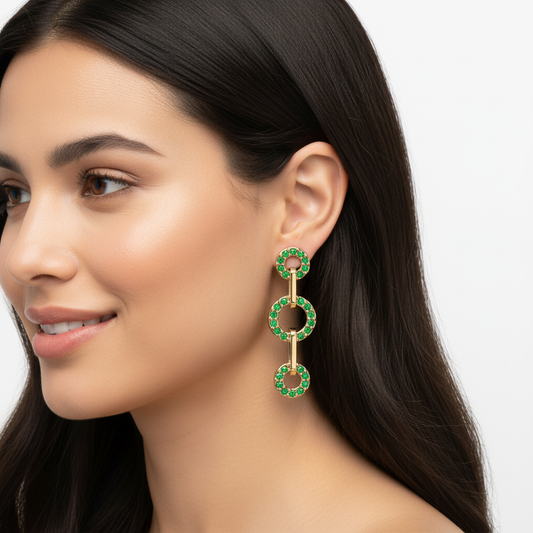

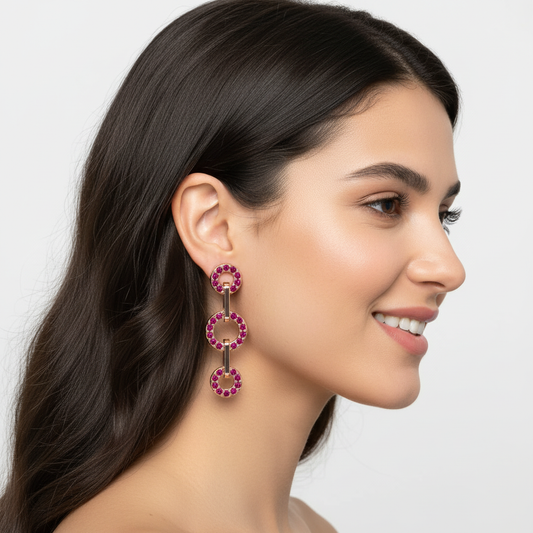

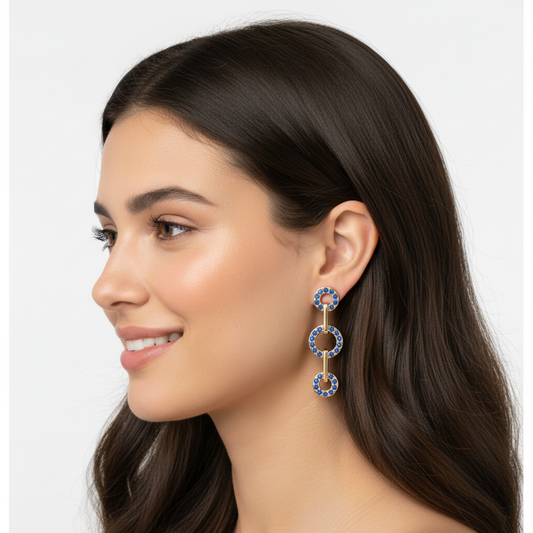

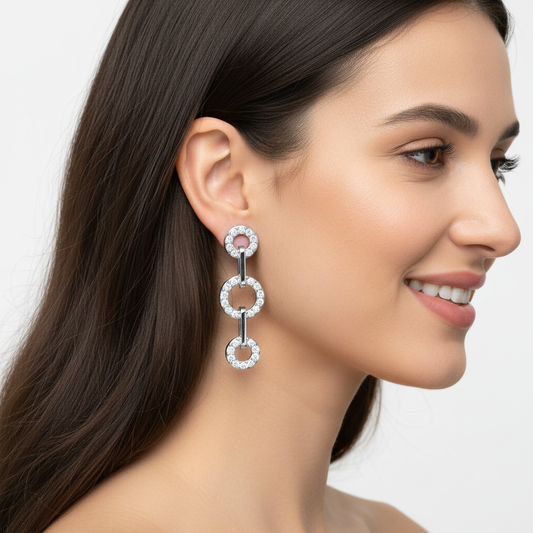

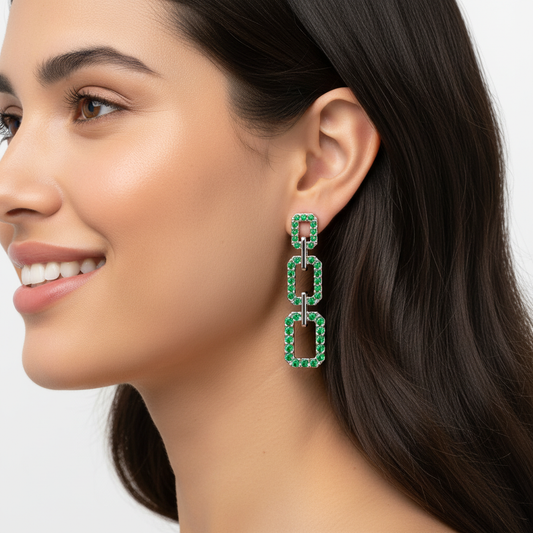

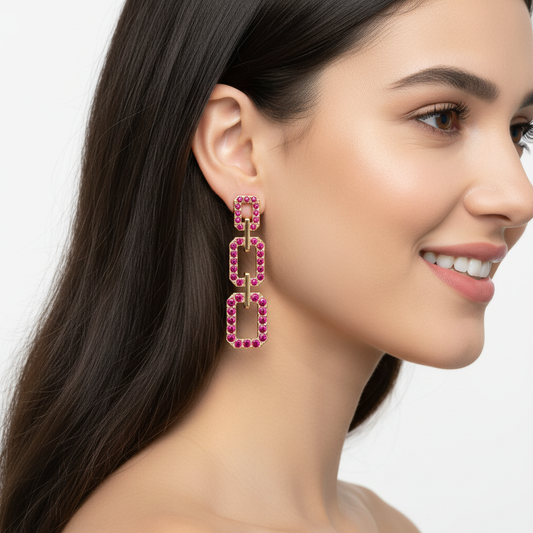

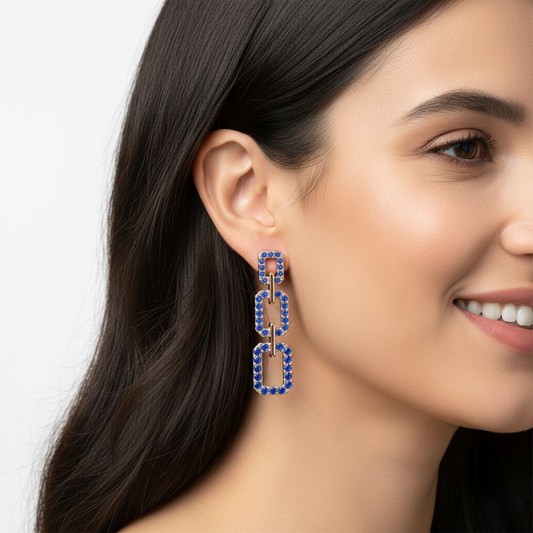

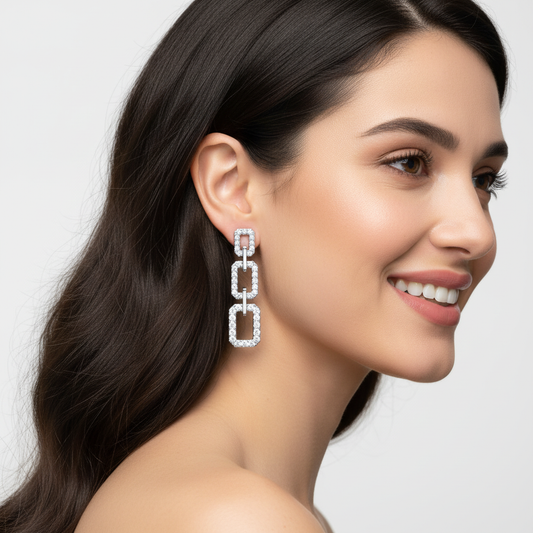

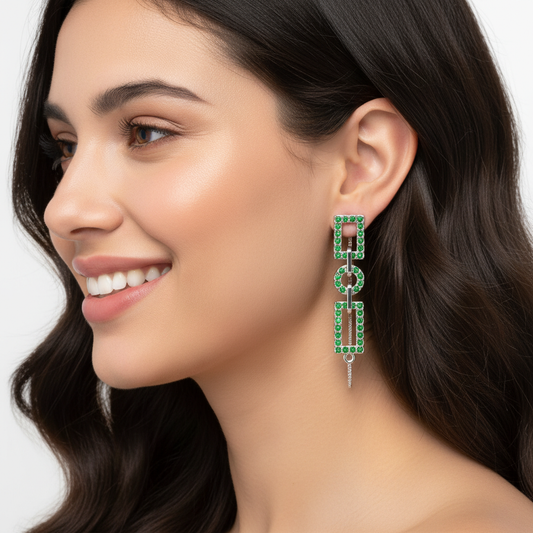

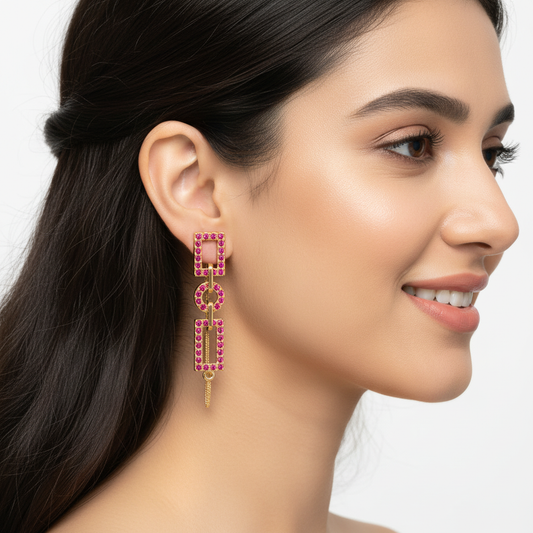

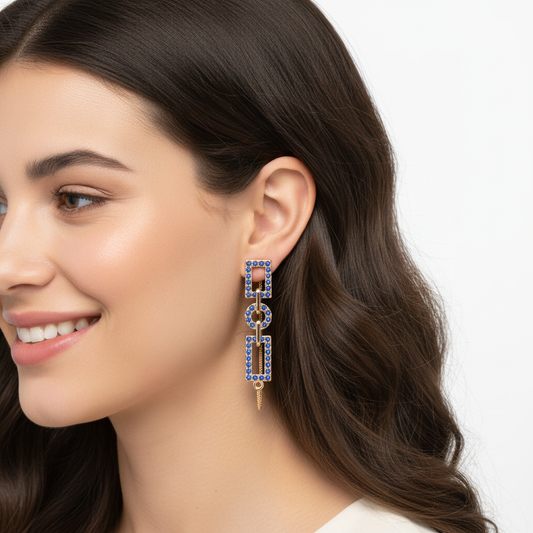

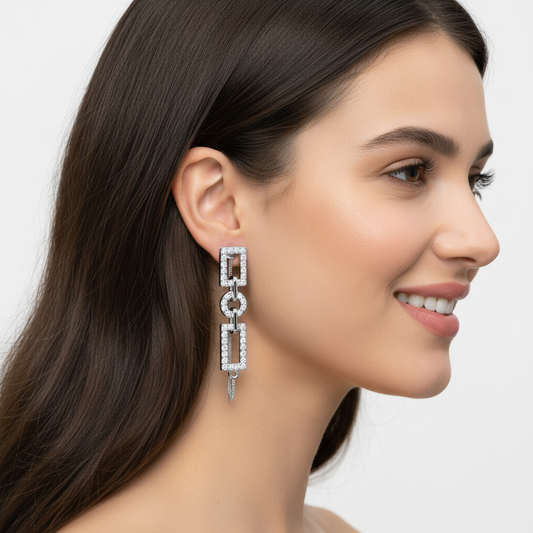




Gold drop and dangle earrings are the pieces that do the most work for the least effort. They catch light on a turn of the head, draw the eye down the line of the neck and lift an outfit without a single other change. This collection holds drop earrings made in solid gold from 9K to 18K, in yellow, rose and white, with certified diamonds, coloured gemstones, hand-set enamel and plain polished gold. Chain link drops, pave set discs, heart threaders, enamel motifs and sculptural twists all hang differently, and the range covers each of them. Every pair is made to order in our own workshop and balanced to hang straight. We ship worldwide with insured tracked delivery to the United States, Canada, the United Kingdom, Europe and Australia.
What Separates a Drop from a Dangle
The two names get used as though they mean the same thing, and they do not. A drop earring hangs just below the earlobe and stays largely still, held close by a short stem or a fixed setting. A dangle earring hangs lower and swings freely as you move, which is where its whole character comes from. Every dangle is a drop, but not every drop is a dangle.
The practical difference is movement, and movement decides where each one belongs. A drop is the quieter of the two, easier to wear through a working day and less likely to catch on a scarf or a collar. A dangle is the one people notice from across a room, and it wants an evening or an occasion to justify it. This collection carries both, and the product photography shows plainly which is which before you commit to a pair.
Earring Styles in This Collection
Six shapes run through the range, and each one hangs in a different way.
Chain Link Drop Earrings

Most of this collection is built on chain link. Oval links, rectangular links, geometric links and triple circle links are joined so the earring articulates at several points rather than one, which is what gives a chain drop its liquid movement. Some carry pave-set stones along every link, some set a single stone in a shaped frame, and some are polished gold with no stone at all. Because the weight is spread across several small links instead of concentrated in one solid piece, a chain link drop usually feels lighter in the ear than a solid design of the same length. If you want to see the shape at its clearest, the pave oval chain link drop earrings show how the stones stay lit through the whole swing. These are the most versatile earrings here and the easiest to wear with a plain outfit.
Pave Set Disc Drops
A small circular disc, ringed with pave-set stones and often framed by a fine beaded halo, hangs just below the lobe. These are the most wearable drops in the range, bright enough to catch light at close range but short enough to clear a collar. The disc shape reads as modern rather than dressy, which is why it moves easily between a working day and an evening. They also stack well, sitting comfortably alongside a plain pair of gold studs in a second piercing without either competing with the other.
Heart Threader Earrings
A threader passes a fine chain straight through the piercing with no back to fasten at all. The chain simply hangs, and you set the drop length yourself by pulling more or less of it through, which makes a threader the only genuinely adjustable style in this collection. Ours finish with a heart set in emerald, ruby, sapphire or crystal, with a slim bar detail along the chain. The crystal heart threader earrings are the lightest pair in the whole range. They weigh almost nothing, they never pull, and they suit anyone who has found solid drops uncomfortable in the past.

Enamel Drop Earrings

Enamel brings colour into a gold earring without using a stone. The colour is fused to the metal rather than painted over it, so it holds its depth in a way plated or lacquered work does not. This part of the range runs to motif designs, from a dolphin against a blue wave to a turquoise disc paired with a pearl and a red and white striped ball. The rose gold enamel teardrop earrings are the pair that shows the technique best, with white and blue laid into a lotus. Enamel on solid gold is unusual at this level, since most enamel earrings on the market sit on plated base metal.
Plain Gold Drop Earrings
Not every drop needs a stone. Some designs rely on the shape of the gold and the way it is polished and nothing else, which puts all the pressure on the form itself. A double circle with a sunburst finish does that with geometry alone. These are the quietest earrings in the collection and often the ones that get worn most, because there is no stone to catch, no colour to match and nothing about them that dates. They are also the lightest entry point into solid gold if you are buying a first fine pair rather than adding to a collection. The spiral twist drop earrings are the clearest example, taking a single length of gold and turning it so the light runs down the twist as the earring moves.

Huggie Hoops with Drop Charms
A small hoop grips the lobe, and a charm hangs beneath it. You get the security of a hinged hoop with the movement of a drop, which is why this shape suits anyone who wants a dangle but does not trust a hook to hold through a full day.
Drop Earring Shapes That Suit Each Face Shape
Face shape is a guide rather than a rule, and comfort always outranks it, but the principle behind it is simple enough to be useful. Earrings tend to look best when they contrast with the outline of the face rather than repeat it.

A round face is balanced by length, so long dangles, linear chain drops and narrow threaders work well by drawing the eye vertically. A square or angular face softens under curves, which is where a rounded design such as the blue sapphire disc drop earrings does more than a sharp geometric shape. A long or oval face has the widest choice of all, though designs with some width near the base, such as a disc, a ball or a wider chain link, sit better than a very narrow drop that only adds more length. A heart-shaped face suits a drop that is fuller at the bottom than at the top, since that balances a narrower jawline.
None of this is worth overriding a pair you genuinely like. Treat it as a tiebreaker when you are choosing between two you like equally.
Matching Drop Length to Your Hair and Neckline
Length decides where an earring finishes and what it has to compete with. A short drop ending near the jaw suits almost everyone and works under any collar. A longer dangle reaching toward the shoulder needs clear space around the neck to be read properly, which is why it sits so well with an open or wide neckline and badly underneath a scarf.
Hair matters as much as clothing and gets considered far less often. Long loose hair swallows a short drop entirely, so if you rarely tie your hair back, a longer or wider design is the one that will actually be seen. A bob or chin-length hair is the case worth measuring for, because an earring that finishes exactly at the hairline looks accidental, while one that clearly ends above or below it looks deliberate. Short hair and updos show the whole earring, which is when a chain link drop earns its length.
If you are wearing a gold necklace at the same time, let one of the two lead. A long dangle and a heavy pendant will fight each other. A long dangle and a fine chain sit together comfortably.
Closures and How Each One Holds
A drop puts weight on the fastening in a way a stud never does, so the closure matters more here than on any other earring.
A hook, sometimes called a fish hook or a shepherd hook, curves through the piercing and holds by the weight of the earring itself. It is the easiest to put in and the traditional choice for a drop, though it offers the least security of the four. A post with screw-back threads on and locks, which is the most secure option and worth choosing for a pair you would be upset to lose. The click top used across our gold hoop earrings hinges shut with an audible snap and does not work loose through the day. A threader needs no back at all, since the chain holds its own position. If a particular closure matters to you, tell us before you order, and the pair is fitted accordingly.
Weight, Balance and Wearing Them All Day
The reason most drop earrings end up unworn in a drawer is not the design. It is the weight. An earring that pulls on the lobe stops being enjoyable within an hour, however good it looked in the mirror.
Weight is only half of it, though. Balance is the other half and it is the part rarely discussed. An earring carrying its mass near the top of the drop hangs straight and sits lightly, while the same weight concentrated at the tip behaves like a pendulum and drags on the piercing. Every pair here is built with the weight distributed toward the top for that reason. Threaders and chain link drops carry the least of all, which is what makes them practical for a full day rather than an evening only. The same attention to balance runs through the wider range of gold earrings we make.
Choosing Between 9K, 14K and 18K Gold
Every pair in this collection can be made in 9K, 14K or 18K gold, which is a choice most jewellers selling drop earrings do not offer at all. It changes both the colour of the piece and how it behaves in wear.
9K gold contains the least pure gold of the three. It is the palest in tone, the hardest of the three alloys and the most affordable, which makes it a sensible choice for a pair you intend to wear daily and for a first fine jewellery purchase. 14K sits in the middle on every measure and is the most common choice across the United States and Canada for exactly that reason. 18K carries the most pure gold, has the deepest and warmest colour, and is what people choose when the piece is meant to be significant. It is slightly softer, though on an earring, which takes far less knocking than a ring, that difference rarely shows.
In the United Kingdom and Australia the same three alloys are written as 9ct, 14ct and 18ct. They are identical.
Yellow, Rose and White Gold in a Drop Earring
Each pair is available in yellow, rose and white gold, and the choice affects how the stones read as much as how the metal does. Yellow gold is the warmest of the three and does the most for emerald, ruby and warm skin tones. Rose gold sits between the two and flatters pink and red stones as well as fair skin, which is why the lotus and pink crystal designs are so often ordered in it. White gold is the coolest and makes a white diamond look brighter by contrast, which is why it is the usual choice for pave set work.
If you already wear one metal colour consistently in your rings and chains, matching it is the safer decision. If you wear all three, a drop earring is a good place to break the rule, since it sits away from everything else you have on.
Certified Diamonds, Moissanite and Coloured Gemstones
Every natural and lab-grown diamond in this collection is independently certified by IGI or GIA, with the report number and full grading details supplied with the piece. Moissanite is certified separately by GRA. The two are different stones with different laboratories behind them, and we do not present them as though they are interchangeable.
The coloured stones are named plainly. Emerald, ruby and sapphire are genuine gemstones. Where a design uses crystal or enamel, the description says crystal or enamel rather than dressing it up as something it is not. Each pair is set and finished by hand in our own workshop, and every post is smoothed before it leaves, because an earring is worn against skin all day and a rough edge is felt long before it is ever seen.
Drop Earrings for Weddings, Work and Evening
A drop earring is asked to do three quite different jobs, and the same pair rarely does all three equally well.
For a wedding, whether you are the bride or a guest, the reliable choice is a drop rather than a long dangle. Pearl, diamond and pave disc designs photograph cleanly, catch light from every direction and do not swing distractingly in a room full of movement. For work, shorter is better. A disc drop, a threader or a small chain link stays clear of a collar, a headset and a phone held to the ear. For evening, this is where a long dangle earns its place, worn against a bare neckline and left as the only piece doing any work.
If you are buying one pair to cover all three, take the middle option: a chain link drop that finishes just below the jaw.
Caring for Gold and Enamel Drop Earrings
Solid gold asks very little. Warm water, a drop of mild washing-up liquid and a soft brush will lift the film that builds up behind a setting, and it is that film rather than the metal itself which dulls an earring over time. Dry the pair fully with a soft cloth before putting it away, and store pairs separately so links do not tangle and stones do not scratch each other.
Enamel needs a little more care than plain gold, though far less than most people expect. Clean it the same way, but do not soak it, and do not put it through an ultrasonic cleaner or any solvent-based product. Enamel fused to solid gold is durable and holds its colour, but it is glass on metal, and a sharp knock against a hard surface is the one thing that will damage it. Take enamel pairs off before the gym and before swimming.
The general rule for any fine earring is to put it on last when you dress and take it off first when you undress. Perfume, hairspray and hand cream do more cumulative damage than wearing the earring ever will.
Made to Order in Your Length, Metal and Closure
Every pair here is made after you order it rather than pulled off a shelf. That is what makes the specification yours instead of an average. Choose the karat, the gold colour, the stone type and grade, the closure and how far the earring falls, and the pair is built to that.
Drop length is the detail most worth specifying, because it is the one thing that cannot be changed once a pair is finished. If you already own a pair whose length works for you, measure it from the top of the earring to its lowest point and give us the figure. If the design, the stone or the length you want is not in the range at all, our custom jewellery service starts from a sketch, a photograph or a description.
Crafted by a Fourth Generation Jewellery House
A drop earring is a balancing problem before it is a design. The pivot has to move freely without wearing at the joint. The weight has to sit forward enough that the pair hangs true rather than turning on the lobe. The stones have to be set so they catch light through the whole swing and not only at rest. Getting all three right consistently, across chain links, threaders, enamel and plain polished gold, takes a workshop that has been solving the same problem for a very long time. Every piece is checked before it is packed, because we manufacture rather than resell. That is the standard of a fourth generation jewellery house which has shaped fine gold since the 1970s, and it is the kind of craft you feel in the ear rather than see in a photograph.
Why Buy Your Drop Earrings from Jebij
Diamonds arrive certified with their grading report. Every pair is made to order in your choice of 9K, 14K or 18K gold, in yellow, rose or white, with the closure and drop length you specify. Pricing stays transparent, with no inflated making charges and no surprise billing. We ship worldwide with insured tracked delivery to the United States, Canada, the United Kingdom, Europe and Australia, and eligible ready-made pieces can be returned within the stated window.
Start by deciding one thing, which is whether you want a drop that stays still or a dangle that moves. Everything after that gets easier.
Explore Other Collections
-

Signet Ring
A Ring That Tells Your Story The signet ring is unique in...
-

Silver and Gold Diamond Pendants for Women
A diamond pendant is the piece that does the most for the...
-

Silver Bracelets and Bangles
Silver is the metal you reach for without thinking. It costs less...


